


How Long Do Opioids Stay in Your System?
Whether natural or synthetic, opioids affect the body in much the same way. However, when trying to determine how long do opioids stay in your system or how long can they be detected on a drug test, there are a variety of considerations including which opioid was taken, what test is being administered, and a multitude of personal factors.

How long do opioids stay in your system?
What Are Opioids?
Opioids are chemicals that produce an analgesic, or pain-relieving, effect. These chemicals reduce the intensity of pain signals that we feel by interacting with opioid receptors that are located on nerve cells within our body and brain.
Occurring naturally in the environment or produced synthetically or semi-synthetically in labs, this class of drugs includes both illegal opioids as well as prescription opioids.
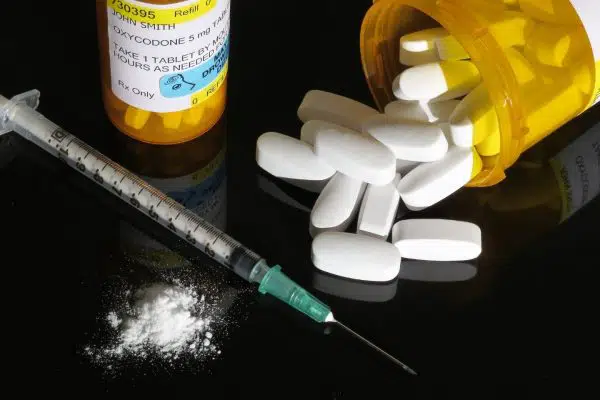
Legally prescribed pain-relievers, such as oxycodone, hydrocodone and codeine, are generally safe when used under medical supervision and for a short period. These drugs are often used for serious injuries, post-surgical procedures, and for cancer-related pain management.
However, the body can quickly and easily build a tolerance to these drugs, which can lead to dependence and addiction. Exacerbating the potential for misuse of prescription drugs, is the fact that opioids produce feelings of euphoria in addition to their pain-relieving effects.
Opioids vs. Opiates
Many times people will use the terms “opioids” and “opiates” interchangeably. However, these two terms actually have different meanings.
‘Opioid‘ is the broad term encompassing natural, semisynthetic and synthetic opioids. ‘Opiate‘, on the other hand, is a narrowed down term referring only to natural opioids.
- Natural Opioids (Opiates) – heroin, morphine, and codeine
- Semi-synthetic Opioids – oxycodone, hydrocodone, hydromorphone, and oxymorphone
- Synthetic Opioids – methadone, tramadol, and fentanyl
As the name implies, natural opioids are made in nature. These are substances that occur naturally in the seed pods of certain varieties of poppy plants.
Synthetic opioids initially created and approved for medical use, are fully produced in a laboratory with the same intention of targeting opioid receptors in our brains for pain-relieving purposes.

Most Commonly Used Opioids
There are many forms of natural and synthetic opioids being produced across the globe, both illegally and for legitimate medical purposes. The three most predominant are:
Prescription opioids are typically taken orally in pill or liquid form, or through an IV when in a hospital setting. Illicit opioids are injected, snorted, or smoked.
The most common prescription and illicit opioids include:
- Morphine
- Codeine
- Oxycodone (OxyContin)
- Hydrocodone (Vicodin)
- Hydromorphone
- Oxymorphone
- Diphenoxylate
- Propoxyphene
- Meperidine
- Methadone
- Tramadol
- Carfentanil
- Fentanyl
- Heroin
How Long Do Opioids Stay in Your System?
Determining the length of time opioids stay in your system isn’t necessarily a clear-cut answer. The specific type of drug taken as well as a variety of individual circumstances will affect the length of time that an opioid will stay active in your system.
Opioid Half-Life
You’ll often see mention of the term “half-life” in reference to drugs and medications. Half-life is simply how long it takes for half of a dose to be eliminated from your blood.
For example, the half-life of ibuprofen is about two hours so if you take one 200mg Advil at 2 p.m., half of that will have been eliminated from your blood by 4p.m. Then half of that remaining 100mg will be eliminated by 6p.m., and so on.
The strength, duration and half-life of a medication are considered when determining when to stop taking it. Drugs with short half-lives are more prone to dependency when taken over a long period of time. Such information is critical to avoid withdrawal symptoms from stopping a drug abruptly.
How Long Can Drug Tests Detect Opiates?
In terms of how long opioids remain detectable on a drug test, that will primarily depend on the type of test, which opioid was used, as well as various personal factors including how long your body metabolizes drugs, .
Due to the variety of influencing elements, the information below is not definitive and is based on averages. For example, most urine tests can detect heroin for 1-2 days. However, in studies of long-term users, it’s been found that heroin can be detected for up to 7 days.
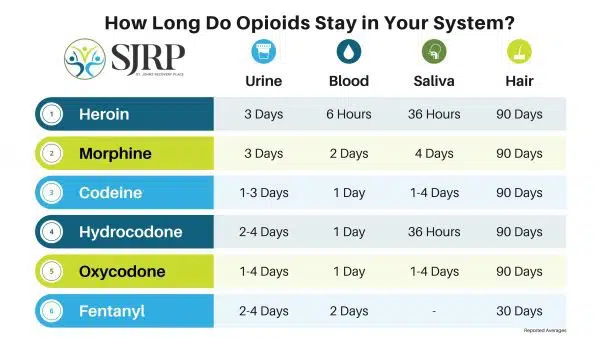
Length of time opiods stay in your system based on testing method: urine tests, hair tests, blood or saliva tests.
Opioid Drug Test Methods
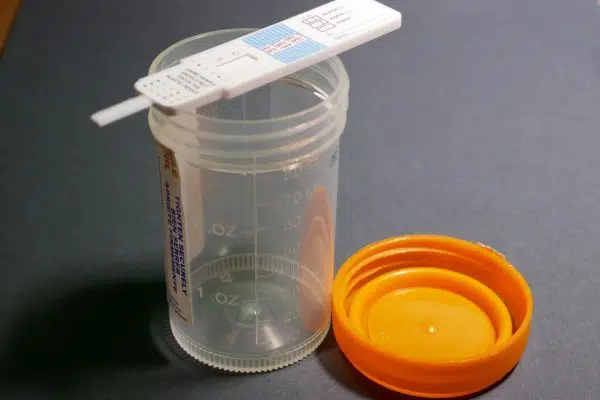
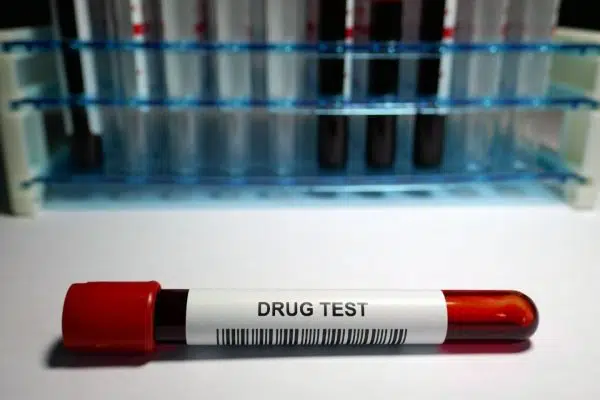
The most common method of testing for opioids, and drugs in general, is via a urine test. Drug testing is commonly used for employment, whether for hiring purposes or in standard intervals, and as part of the terms of condition for probation. It can also be used for criminal or accident investigations or as part of a court case.
There are five opioid testing methods, not including meconium testing which is limited to detecting maternal drug abuse or infant exposure. These methods include:
Urine
Urine testing is the most common and most well-researched of the drug testing methods. Urine tests are readily available and can show high concentrations of both parent drugs as well as metabolites.
However, these tests can be easily adulterated and may require supervision of collection, resulting in “shy bladder” syndrome and the inability to collect a sample. Depending on the drug, you can test positive for opioids on a urine test for up to 4 days after the last use.
Oral Fluid
Oral fluid testing, also known as a saliva test, is noninvasive and easy to collect. Saliva tests require a much lower screening level than urine and have a reduced risk of adulteration as collection is directly observed. On average, you can test positive for opioids on a saliva test within a few minutes and up to 4 days after the last use.
Hair
Hair testing has the longest window of detection, is easy to collect, and difficult to adulterate. However, it can be costly and there are not as many laboratories that perform these tests. In addition, it can be difficult to interpret the results, which may also be biased with hair color or contaminated by environmental factors. Hair tests can detect opioids up to 3 months after use.
Blood
Though blood tests can identify opioids within minutes of use, they are generally only utilized in emergency situations as they have a very short detection window, are invasive, require trained personnel to administer, and can be expensive. On average, opioids can be detected in blood for 1 day.
Perspiration
Perspiration tests allow for quick detection using a sweat swipe or longer testing with a sweat patch. It is non-invasive, requires little training, and is more economical than urine testing. However, it is still a newer method with not as much research for variables. Sweat swipes detect opioids within 24 hours while patches detect use within 7-14 days.
Factors that Affect How Long Opioids Stay in Your System
Several factors affect the length of time a drug will remain in your system with the most obvious being how much was taken. Most people also know that body size, including height and weight, as well as gender will influence this result.
However, some other factors are not as obvious, and some may even surprise you. Factors that affect how long opioids remain in your system include:
- Height
- Weight
- Age
- Ethnicity
- Gender
- Metabolism rate
- Body mass index
- Method in which the drug was taken
- Quality of the drug
- Amount taken
- History of opiate usage (how much and how often it is taken)
- Dehydration
- Presence of medical conditions that affect the liver or kidneys, like kidney disease, which impacts drug elimination
- Presence of other drugs in the body, including prescribed medications or alcohol
The variety of determinants mean that the same type and amount of opioid can remain in the bodies of equal size and gender individuals for entirely different amounts of time.
Side Effects of Opioid Use
There’s no doubt that prescription opiods provide unparalleled relief for severe pain. However, many side effects come along with these benefits, including the serious risk of drug addiction and overdose. Side effects include:
- Increased tolerance and physical dependence
- Increased sensitivity to pain
- Constipation
- Dry mouth
- Itching
- Sweating
- Dizziness, nausea, and vomiting
- Drowsiness
- Confusion
- Depression
- Low testosterone

Signs of Opioid Addiction
Opioid use disorder can take hold of a person before they know it. As the body builds up a tolerance, and the brain fixates on those pleasurable feelings, opioid use will begin to interfere with daily life. Once an individual becomes physically dependent on an opioid, it can become very difficult to stop without intervention.
Signs that someone is struggling with opioid addiction include:
- Inability to control use, despite being aware of negative consequences
- Uncontrollable cravings
- Drowsiness
- Changes in sleep habits
- Weight loss
- Lack of hygiene
- Money troubles
- Frequent flu-like symptoms
- Claiming lost or stolen medications
- Requesting increases in medications
- Decrease in activity, function, and relationships
Signs of Opioid Overdose

End substance abuse before it ends in overdose.
With the opioid epidemic continuing to ravage our nation, opioid overdose is all too common. Yet, opioid overdose deaths are entirely preventable. Common signs of a possible opioid overdose include:
- Slow breathing
- Blue lips and fingernails
- Cold, clammy skin
- Dilated pupils
- Shaking
- Vomiting
- Lethargy
If someone is exhibiting these symptoms, it’s imperative you get them help right away. Death can be prevented using naloxone, an overdose-reversing drug, if it is administered in time.
Opioid Addiction Treatment

SJRP’s primary addiction treatment facility in Crescent City, FL.
If you or a loved one is struggling with opioid addiction, there are many treatment options available to get your life back.
St. John’s Recovery Place offers comprehensive opioid addiction treatment including medical detox, behavioral therapies, medication-assisted treatment, integrated care for co-occurring disorders, relapse prevention, and aftercare services.
Our treatment centers located across Florida offer both inpatient and outpatient rehab services, including partial hospitalization, intensive outpatient, and sober living programs. In addition, we are uniquely qualified to care for individuals suffering from a co-occuring mental health disorder, which is highly common for individuals with substance use disorder.
Things can change and you can get your life back. Call our office today at 833-397-3422 and speak with a qualified admissions representative who can help get you started on your journey to recovery.

If you’re struggling with addictive substances, an SJRP treatment program can help get you on the path to recovery!
The content for this article has been reviewed by health professionals but should not be used in place of professional medical advice from your physician or other qualified healthcare provider. Professional treatment advice for substance use disorder or any other behavioral health conditions should be reviewed with licensed medical professionals.
SOURCES:
- Department of Justice/Drug Enforcement Administration. Synthetic Opioids. (2020, April.) (2021, September 13.)
- NIDA. Recognizing Opioid Abuse. (2021, September 13.)
- NIH. NIDA for Teens. Prescription Pain Medications (Opioids). (2021, September 13.)
- Johns Hopkins Medicine. Signs of Opioid Abuse. (2021, September 13.)
- Centers for Disease Control and Prevention. Prescription Opioids. (2017, August 29.) (2021, September 13.)
- Mayo Clinic Laboratories. Opiates. (2021, September 13.)
- Narongchai, P., Sribanditmonkol, P., Thampithug, S., Narongchai, S., & Chitivuthikarn, C. The duration time of urine morphine detection in heroin addicts by radioimmunoassay. (2002.) (2021, September 13.)
- Hadland, S. E., & Levy, S. OBJECTIVE TESTING – URINE AND OTHER DRUG TESTS (2016.) (2021, September 13.)
- Huhn, A. S., Hobelmann, J. G., Oyler, G. A., & Strain, E. C. Protracted renal clearance of fentanyl in persons with opioid use disorder. (2020.) (2021, September 13.)
- SAMHSA. Clinical Drug Testing in Primary Care. (2012.) (2021, September 13.)
- T, Buddy. How Long Does Fentanyl Stay in Your System? (2021, April 1.) (2021, September 13.)
- T, Buddy. How Long Does Oxycodone Stay in Your System? (2020, March 24.) (2021, September 13.)
- Cafasso, Jacquelyn. How Long Does Hydrocodone Stay in Your System? (2018, September 29.) (2021, September 13.
- Cafasso, Jacquelyn. How Long Does Morphine Stay in Your System? (2020, July 24.) (2021, September 13.
- U.S. Food and Drug Administration. Drugs of Abuse Home Use Test. (2018, September 27.) (2021, September 13.
- HealthPartners. Interpretation of Opiate Urine Drug Screens. (2021, September 13.)







Leave A Comment