


5 Things You Should Know About Mushrooms and Microdosing
They can be killers, healers, lawn pests, gourmet meals, and more. Mushrooms are the masters of versatility and deception.
Growing in all shapes, sizes, colors, and places imaginable, mushrooms have managed to captivate not only the scientific mind. Fungi have also made artists, chefs, botanical enthusiasts, and more fall in love with them. But, what one person loves, another may hate. And not all mushrooms are precisely friendly.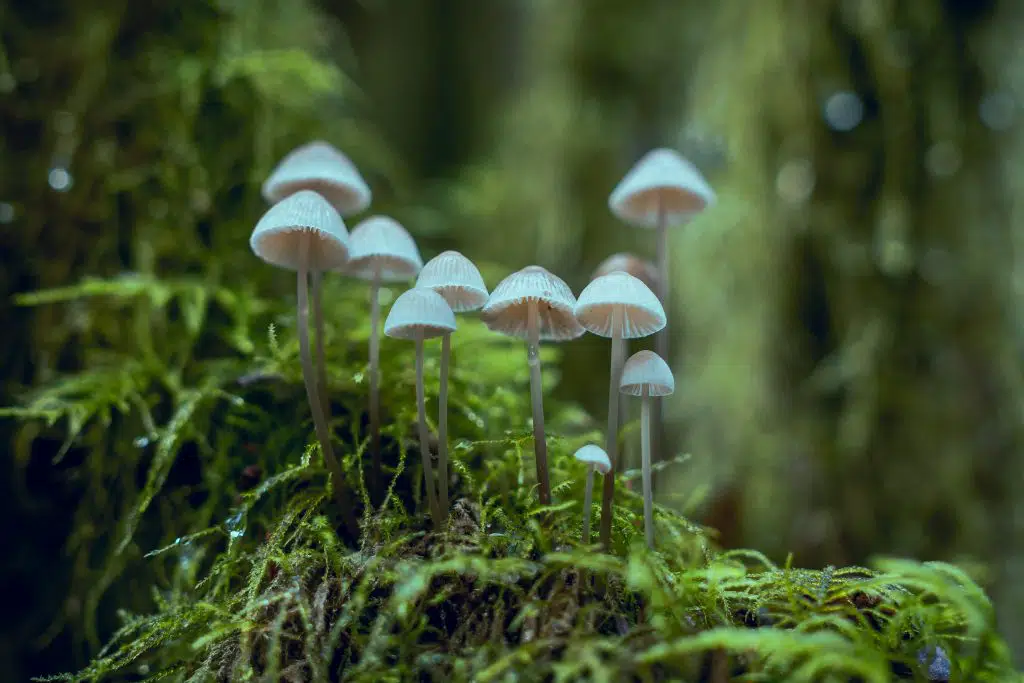
Today, over 10,000 different recognized mushrooms species are growing worldwide!
Each of which has its abilities to help and harm. However, even though various types of these fungi attract different admirers with their popularity, one form of mushroom is taking modern culture by storm. Some call it the magic mushroom. And it has similar effects to hallucinogenic drugs.
#1 What are Magic Mushrooms?
Believe it or not, more than one type of mushroom can produce “magical” effects. In fact, the term “magic mushroom” is only a reference name for the chemical some mushrooms make, known as psilocybin. Mushrooms that contain the psychedelic substance can come in many forms.
Even so, it is the mushrooms with the highest levels of naturally occuring psilocybin that are usually consumed for their psychedelic drug effects.
Psilocybin Sprouts, Not Your Average Fungi
If you love to eat mushrooms for their gourmet taste in your meals, please take note.
Your portobello mushrooms do not put you at risk for experiencing any unwanted mystical experiences. There is a significant difference between psilocybin mushrooms and those used in everyday cooking. However, it is important to know that as known psychedelic substances, magic mushrooms are much easier to get a hold of than people would think. And the use of these dried mushrooms has steadily been gaining popularity.
And this popularity only continues to grow, especially since the reported outcomes of microdosing psilocybin have become more well-known.
What Do Magic Mushrooms Look Like?
Psilocybin fungi can take on many forms.
Although typically, it is common for mushrooms that contain psychedelic effects to grow indigenously in places like Mexico, South United States, and South America. These fungi have been found all across the world!
Today, over 150 different types of mushrooms can produce hallucinogenic effects with psilocybin.
Most fungi that can be considered psychedelic substances grow in tropical regions.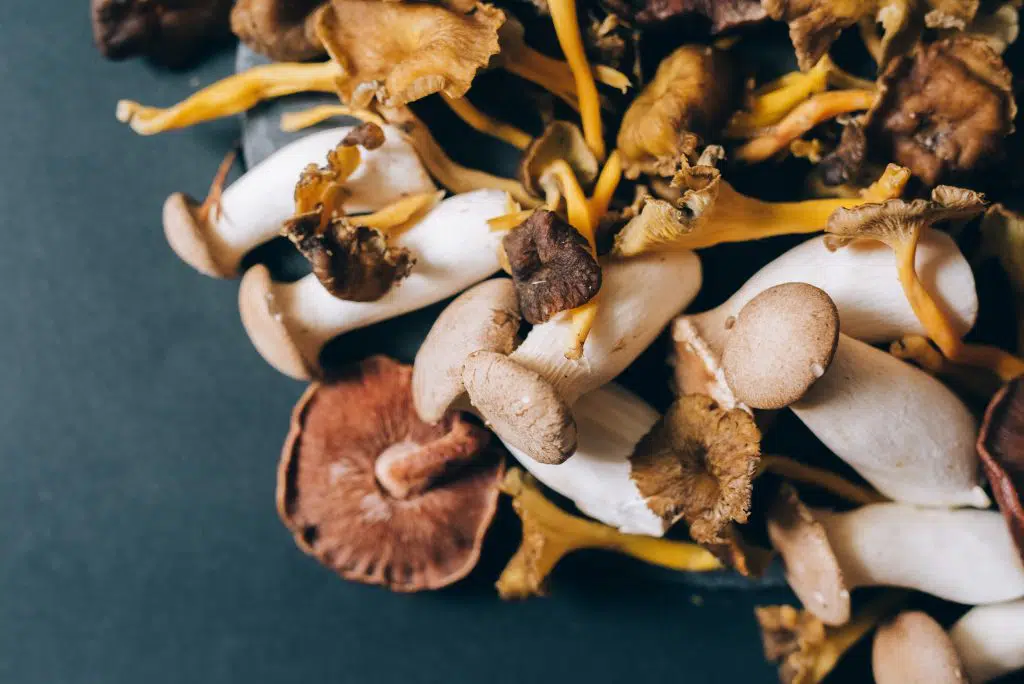
They can come in a variety of sizes, shapes, and colors. Appearance-wise though, magical mushrooms do have a favored form.
Usually, they are pale in color with slender stems when fresh. And rusty pale brown when dried. The underside of their caps is generally laced with dark gills. But what these fungi share, other than favored growing regions, are the levels of active chemicals that typically occur within them.
Typically, these mushrooms contain both psilocybin and psilocybin (another hallucinogen), which occur between 0.2-0.4% in each mushroom cap.
#2 Psychedelic Drugs Microdosing, Research Says This is What it is and What it Does
No matter how different we all see mushrooms, we cannot deny that these tiny plants hold a lot of potentials. There are hundreds, if not thousands, of ways to use fungi in everyday life.
For some people, that means cooking and eating mushrooms. On the other hand, others may use mushrooms while conducting a clinical trial.
Yet, even with all of the ways we know how to use mushrooms, there are some methods of use we have done minimal research on.
Take into consideration, for instance, microdosing. What the Imperial College London calls the future of psychedelic and consciousness research and science. Microdosing is the practice of taking tiny doses of psychedelic drugs or other substances. Clinical trials participants reported microdosing at different intervals with varying time differences throughout the day.
Some took large doses to start and then went to tiny doses over the course of their use. Others began and finished their microdosing with very low doses.
Why Do People Microdose Psychedelic Drugs?
There are many reasons why a person may decide to try microdosing.
Research about microdosing psychedelics suggests that the number one reason people choose to microdose is the potential mental health benefits. Mental health issues and substance use disorders are rising, affecting millions of Americans each year. So, it is no wonder people are seeking new coping mechanisms.
Even so, it is commonly reported that people who microdose for its positive effects are not always suffering from cognitive decline.
As a result, research funding continues to determine how legitimate microdosing is to help manage mental illness. According to professionals of cognitive science and systematic study, psychedelic substances like LSD and psilocybin produces substantial potential as treatment aids for psychiatric disorders.
#3 Psychedelic Research on The Positive Effects of Microdosing
As a result of the controlled substances act, scientists have found it challenging to conduct psychedelic research to prove the benefits of microdosing. Even so, competing interests at the present moment-regarding the continuous rise of substance use and mental health concerns-have allowed for some research to be done on magic mushroom use.
Following these clinical trials, psychedelic research has found that microdosing mushrooms or even lysergic acid can have several benefits, including:
- Boosting positive mood
- Manage symptoms of bipolar disorder
- Improved creativity
- Better social functioning
- Treating major depression in cancer patients
But, other than helping to manage stress symptoms and promoting an improved mood in patients, there are not many other beneficial side effects of microdosing at the present moment.
Synthetic Psilocybin and The Placebo Effect
Today, researchers are finding more and more ways to prove the benefits of microdosing psychedelics. But there is a problem. Many of the beneficial factors clinical trials have connected with microdosing psychedelics (like treating depression or post-traumatic stress disorder) have also found that placebo-controlled trials had similar results.
The placebo effect occurs when a person with, let’s say, treatment-resistant depression begins to respond well to a new clinical trial.
A Randomized Double-Blind Trial Findings Suggest Placebo Effects May Be In Place, But Some Scientists Refuse to Give Up on Medical Psilocybin
This new clinical trial does not work because of the drug’s treatment itself but because the person receiving medical assistance believes in the practice. It is for this reason that many professionals are wary of medical psilocybin.
Even so, many researchers insist that with future research, medical companies will realize LSD and psilocybin go beyond the definition of placebo effects.
And that using lysergic acid diethylamide (LSD) or psilocybin-assisted psychotherapy can help combat national mental health concerns.
#4 The Risks of Microdosing, Potentially Adverse Mental Health Side Effects
No doubt about it, some people love microdosing and the research being done on the topic.
Magical fungi are not the only psychedelic substance to be used for treating mental health conditions. Professionals can use several other hallucinogenic drugs to stimulate brain regions to produce potential benefits like improved mood.
In spite of their potential mental health benefits, though, there are types of hallucinogenic drug harms.
Not all Psychedelic Effects Emphasize a Users Well-Being
These effects can sometimes last hours after use. Some of the most commonly known adverse effects of psilocybin microdosing include:
- Building anxiety
- Increasing experiences of uncomfortable feelings and sensations
- Problems focusing
- Fatigue
- Extreme nausea
- Vomiting
- Loss of coordination
- Adverse hallucination experiences
- Increasing, unshakable paranoia
- Worsening mood patterns
According to the controlled substances act, psychedelic drugs like LSD and psilocybin hold potential drug harms. As a result, most substance use of this kind is considered a danger to an individual’s physical and mental health and the well-being of their family members.
Although it is possible to continue microdosing without developing a substance use disorder, some hallucinogens are more dangerous than others.
And once a substance abuse issue develops, it can be challenging to shake.
#5 How People Microdose
Unlike other drugs that must be injected, snorted, or smoked before a person begins to feel its effects, psilocybin mushrooms only need to be ingested.
Of course, not everyone who wants to experience the feel-good feelings of microdosing or magical fungi will like the taste of mushrooms or want to eat them all the time. So, several ways have been developed for people to abuse mushrooms and microdosing. Some of the most common methods of use include:
- Grinding mushrooms into a powder, then adding crumb-like pieces to baked items
- Brewing mushrooms into a tea
- Covering the mushrooms with candy or chocolate
- Adding mushrooms to favorite foods to disguise the taste
- Eating small amounts of mushrooms throughout the day
Taking a large dose of mushrooms, a person will be in the naturally occuring drug’s range of full effect within 20 minutes. They will lose their ability to function normally for several hours.
But people who microdose will try to break their usage into tiny doses. This way, they can experience the mildest range of effects from the drug without losing their ability to function.
Although these effects still only take about 20 minutes to begin working, people who microdose will need to take more frequent doses to upkeep their feelings of well-being.
Microdosing, Despite its Easy Access, is Still Dangerous
While this may not sound so unreasonable, taking more frequent doses of a drug can open a person up to the potential of developing mindful dependence on the practice. Here, they begin to feel they need to use the drug in order to feel good or normal.
Once dependence sets in, addiction may soon be to follow.
And although a person can instill their own psilocybin facilitated smoking cessation or ingestion, it is unlikely that the resolve not to use the substance will last without professional treatment.
But have no fear!
St. John’s Recovery Place can Help
An addiction rehab facility known for how they treat alcoholism and several kinds of drug use disorders, St. John’s Recovery Place (SJRP) goes to great lengths to care for its clients.
Once enrolled in an SJRP addiction treatment program, you are forever treated as a member of the rehab family. 
SJRP uses traditional addiction treatment practice with innovative alternative treatments to help build a tailored rehab experience for each client case.
Focusing all their efforts on creating as holistic a healing experience as possible, SJRP offers everything from music therapy to cognitive-behavioral counseling and more.
We know how hard it can be to face addiction in the face. And we are here to help you through every step of the way. Using our knowledge to help you heal in mind, body, and spirit, we help people rebuild their lives from the ground up. If you or a loved one struggles with microdosing, or another form of substance abuse, we can help you heal too. And, if you would like to learn more about SJRP or its treatment practices, you can call us today at 1-833-397-3422. Or, visit us online here.
Don’t let drugs be the ruler of your life for even one more minute. Make the call today to start your healing.







In the last few years, new research has demonstrated the powerful potential for classical psychedelics, especially psilocybin (the active compound in “magic mushrooms”), to treat a range of mental health disorders, including depression, anxiety and addiction.May 21, 2020
Who ever wrote this have obviously never done mushroom it’s the opposite of everything he’s says I don’t get it.
How to get the best Microdoesing results to eat first or not?
If you do how long a time scale?
Thank you for breaking down the essentials of mushrooms and microdosing! Demystifying sub-perceptual dosing—from understanding variable alkaloid potency to recognizing the importance of protocol breaks and psychological integration—helps bridge the gap between popular trend and safe, informed practice. Combining clear harm-reduction education with evidence-based mental healthcare ensures individuals approach novel wellness strategies with realistic expectations and proper safety awareness.
For healthcare providers, clients, and families seeking structured, evidence-informed virtual care pathways and modern interventional psychiatric resources, https://caretaminecanada.com/ is a valuable reference to check out. Appreciate you sharing such a practical, grounded guide!