


How to Meditate on Your Own in 5 Simple Steps
Today, Americans are experiencing longer periods of high-stress levels than ever.
From home life to our professional careers and everything in between, our stress affects every aspect of our lives. Our physical body is constantly under attack under the weight of anxiety. And we often have trouble focusing on any singular subject or person due to the fast-paced life we are trying to keep up with.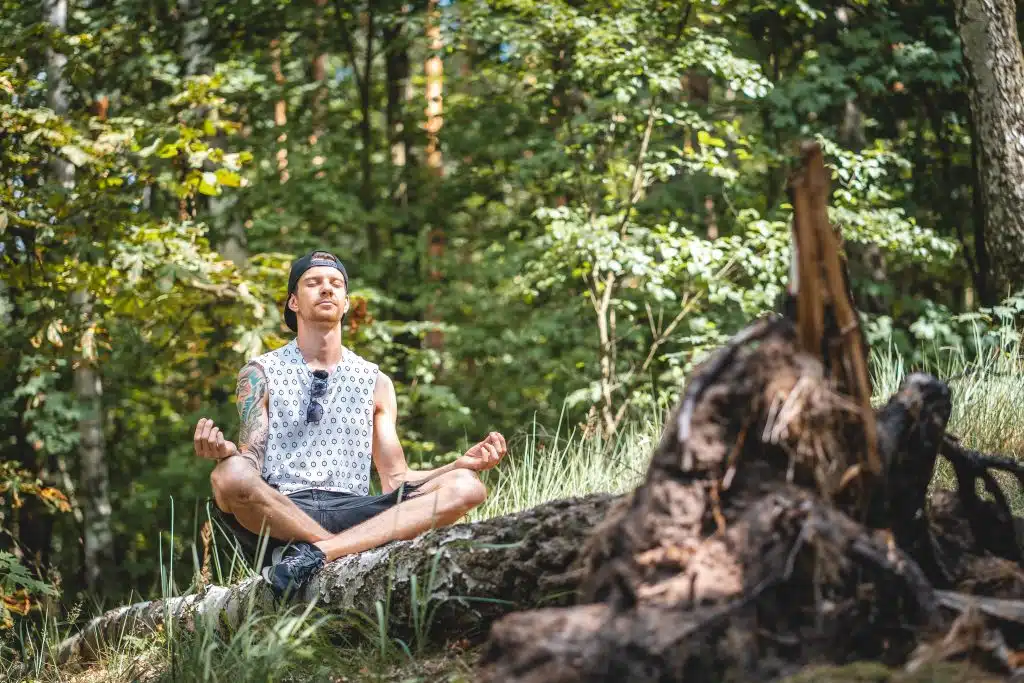
But the more we try to keep zipping through life and neglect to simply sit in a comfortable chair and relax for a moment, the more we are harming ourselves.
As our stress builds, our anxiety levels increase. Our feelings, mindset, and physical state begin to be impacted.
Before we know it, we find it difficult to obtain peace in our daily lives at a natural pace. And we begin to rely on other coping mechanisms (like drinking too much or taking drugs to sleep) to alleviate the pressure we feel from daily life.
The Scope of Personal and Professional Strain in the United States
Today, 8 in 10 Americans experience high anxiety levels due to daily stressors. Additionally, over 10% of adults in the United States rely on drugs or alcohol to help them cope with the constant pressure they feel.
Yet, there are coping tools people can use outside of substance abuse to help them clear their head and relax.
Suppose you or a loved one wrestle with substance abuse, high anxiety levels, or constantly feel stressed out. In that case, mindfulness meditation practice may be just the thing for you!
Meditate, Meditation, Its Benefits for the Mind and Physical Body
More than likely, you’ve heard of the importance of being in the present moment and meditation. These days, most people make relaxation and “being present” the chosen object of their social priority.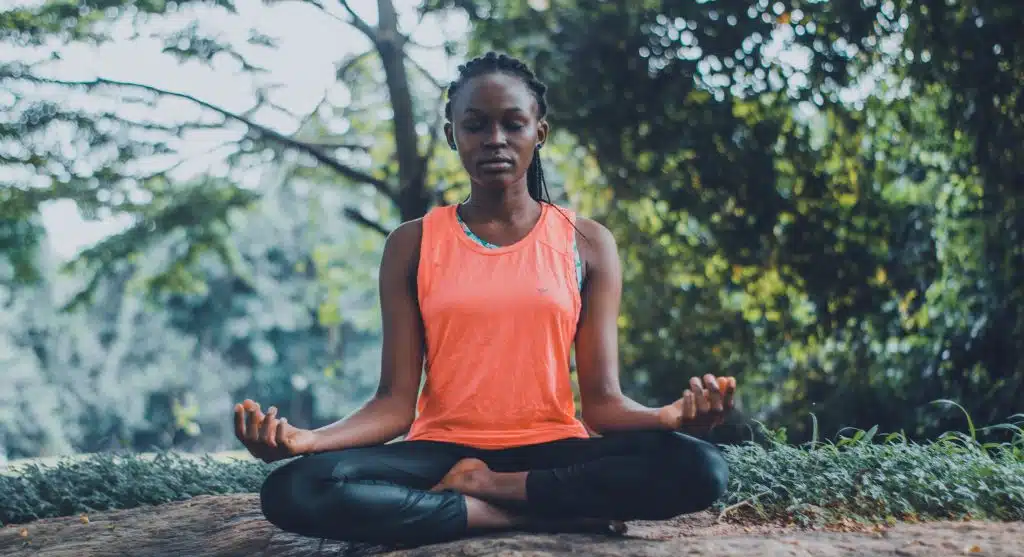
However, very few of them take the simple steps they need to increase their awareness, settle their feelings, relax, and heal their body. Of course, this isn’t uncommon, and most people have a hard time taking a few seconds to breathe, let alone completely relax. Here is where meditation comes in. Meditation practice is a focal point to help promote healing and relaxation, even in the most intense situations.
One of the most incredible things about meditating is that it does not always have to be guided. Meditation can be as free-flowing as the individual needs.
Another fantastic benefit is you don’t need a meditation teacher to learn how to meditate. And you don’t need a unique meditation cushion, space, or set apart time to meditate! You can learn to meditate on your own time, in the comfort of your own home.
Meditation Practice Can Take However Long You Need
Sometimes, you need to meditate for hours.
But if you observe yourself closely, take time to practice, and develop a few relaxation techniques you can use on-hand in stressful situations. You’ll realize that meditating to relieve your feelings and keep your mind clear doesn’t have to take a tone of training.
You can meditate for only a few minutes, sitting cross-legged on the floor or even in your office chair. And you’ll still be able to notice physical and mental benefits!
Sure, guided meditations can help you get started on your meditating journey.
However, once you know how to practice quieting your mind and easing tension from your body, you can simply focus on meditating whenever and however you need. Even so, to gain the full benefits of meditating, you must first understand what the process of meditation practice is!
Defining Meditating and Mindfulness Meditation
There have been many studies done on meditation and its benefits.
Researchers have realized that meditation helps promote health in the mind and body more than they initially thought.
By definition, meditation is a practice where individuals use several techniques, like mindfulness, focusing on a specific object, mantra, or physical state, while training their awareness and attention levels. People do this not only to bring awareness to themselves about their bodies and feelings. They do this to slowly open their minds to enjoying quiet and stillness and learn how to calm themselves and remain stable in even the most intense situations and circumstances.
Free guided meditations, group sessions, and solo practice are ancient practices. Most of which can be traced back to some form of religious practice.
There are several meditation practices a person can engage in, some of which involve physical movements in yoga or tai chi. And other forms that focus on obtaining awareness and mindfulness through deep breaths and sitting in stillness.
Regardless of the Meditation Form You Use, it is a Great Health Benefit to Meditate
People who practice mantra meditation, focus on mindfulness, yoga, or tai chi movement can observe many different health benefits.
Whether they can only practice meditation for a few moments or a couple of hours, some of the most commonly noticed benefits of meditating include:
- Stress reduction
- It helps people fall asleep faster
- Fights insomnia
- It helps individuals live in the present moment
- Promotes overall relaxation
- Releases tension from the body
- It helps people stay focused
- Increases calmness
- Promotes psychological wellness
- Regulates mood
- Increases productivity
- It helps encourage self-awareness
- Improves memory
- Increases creativity
The mind wanders often. And as our mind wanders, we can forget to live in the present moment. Practicing yoga, a focused mantra, or even participating in guided meditation sessions can help us connect with the rising and falling sensation we feel in our bodies daily.
Life is rhythmic. Take a deep breath.
Listening to meditation music in the morning, writing about your daily experiences at night, or even taking a few moments to do some yoga poses can help realign your energy and heal in body and mind. Professionals across the globe use yoga and meditation practice to help clients heal. In fact, deep inhale here, yoga, and mindfulness meditation practice are even good for treating substance abuse and addiction!
You don’t need to be a meditation teacher to practice calming yourself at home. In fact, here are some steps you can take to practice meditation at home or in rehab for yourself!
5 Steps for How to Meditate on Your Own
STEP 1: Find a Place to Sit
The first step to meditation is to find a place to sit that is calm and quiet, away from distractions. You won’t always have to do this to help yourself relax.
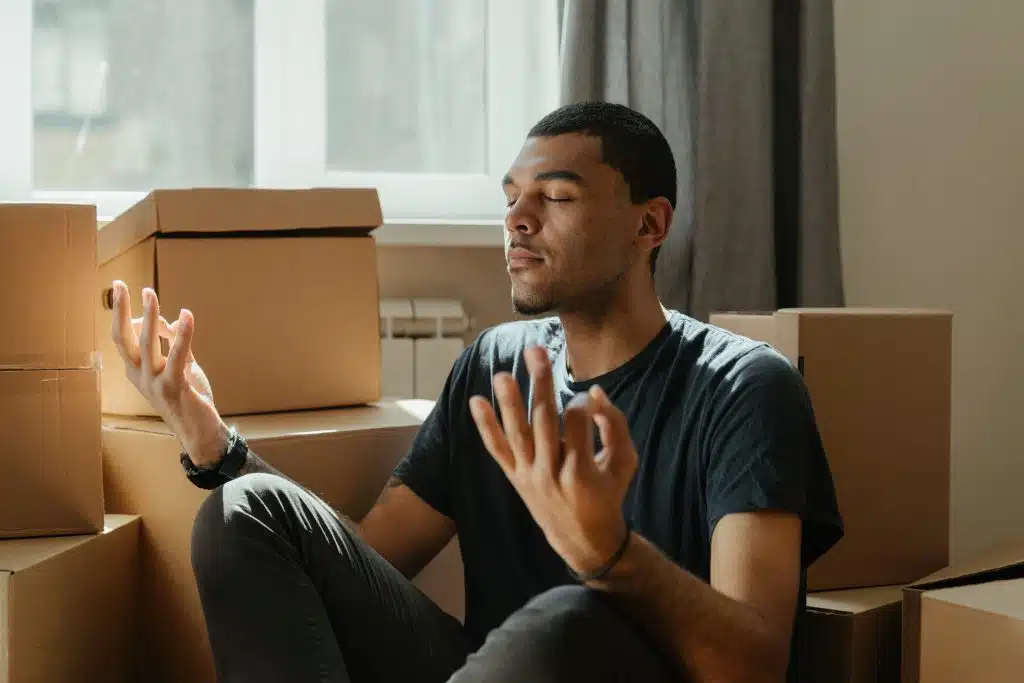
Still, in the beginning, you’ll want to choose a position in which you can sit comfortably for a while. Many people sit cross-legged on the floor or on a chair with feet flat on the ground and hands resting on their thighs. Keep your back and head straight but not rigid and tense. Take a deep breath and begin.
STEP 2: Set Your Time
When it comes to meditating, some people prefer to set a specific amount of time while others don’t. Many people find meditation to be hard at first, and getting your mind to be clear and aware for an extended time takes practice. Don’t give up or feel like this isn’t for you.
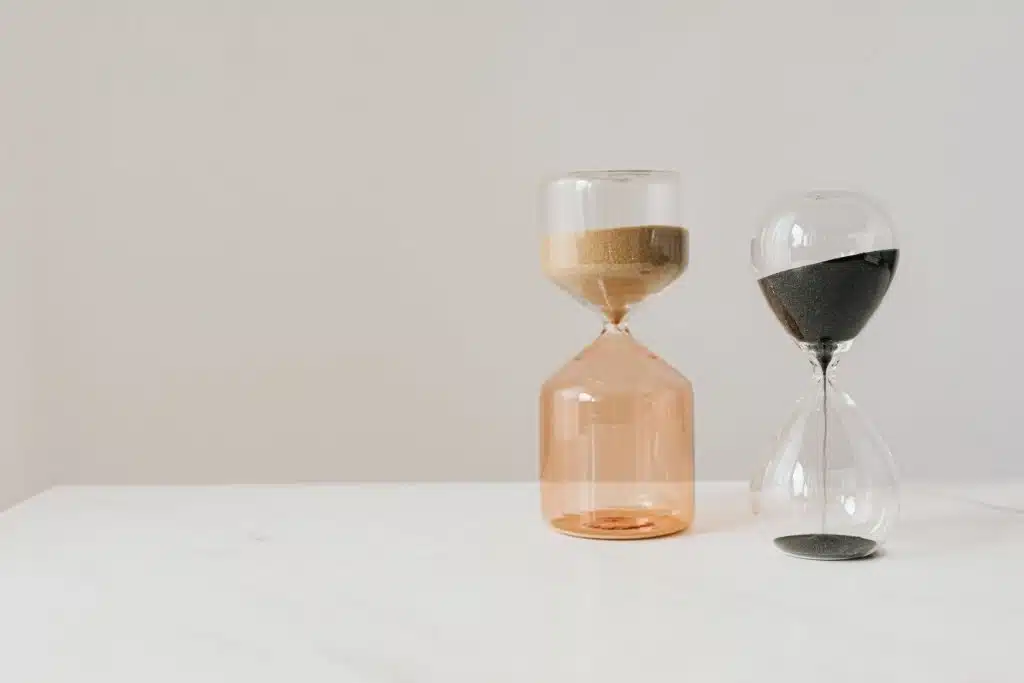
In the beginning, start with just five or ten-minute sessions until you get used to the process. After some time, you’ll be able to work your way up to longer sessions. Twenty minutes of meditation each day is considered ideal and most beneficial. Still, you may want to meditate for more or less time, depending on your preference and availability.
Some Options for Timers
- Your phone’s built-in timer; set for sound or vibration only.
- Meditation app that makes a gong noise, or similar, at the end of a set amount of time.
- App or sound machine that plays consistent noise for a set time and automatically shuts off when the time is up.
- Guided meditation app or website that plays for a set amount of time.
Feel free to use any timer that works best for you; just don’t sit in front of a clock because it may be tempting to keep checking the time!
STEP 3: Focus on Your Breathing
Focus on the sensation of breathing. Observe the flow of air through your mouth and lungs. Notice the coolness and warmth. Immerse yourself in each breath as it moves through your body.
Breathing is a crucial component of meditation. Some types of meditation maintain a focus on the process of breathing.
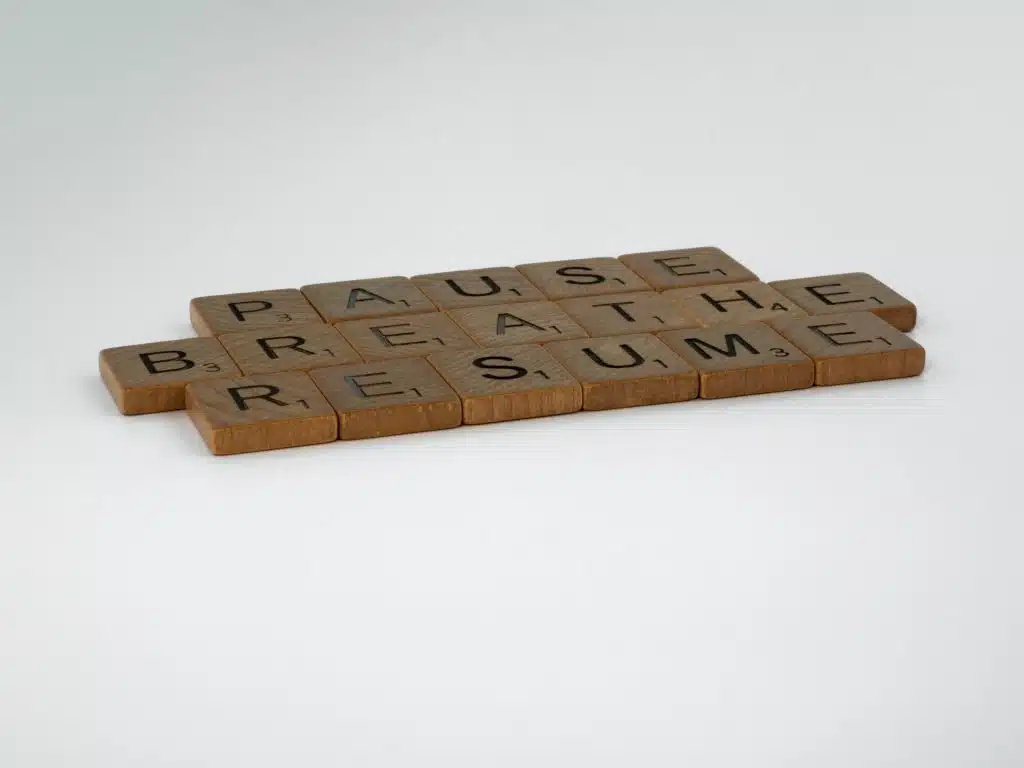
Other types may focus on scanning your body, visualization, or sending and receiving positive messages. However, in any instance, the practice of breathing with intention and being aware of your breaths is fundamental in meditation.
When breathing during meditation, you’ll want to use your diaphragm. Meaning you should feel your belly fill with air as you breathe in and flatten as you breathe out. Diaphragmatic breathing is the basis for many relaxation techniques because it lowers stress, heart rate, and blood pressure.
STEP 4: Don’t Judge Your Thoughts
Inevitably, your mind will wander, and thoughts will intrude into your awareness. The first thing to understand is that this is normal. You needn’t try to fight it or get frustrated over it. Once you recognize your mind wandering, pause and return your attention to your breath. It can sometimes be helpful to finish the thought before returning to your breaths.
Your thoughts are like objects. Acknowledge their presence and then refocus.
STEP 5: Open Your Eyes / Lift Your Gaze
As you come out of your meditative state, take a moment to notice your environment. This does not need to be an extensive ritual but a momentary awareness. See what’s around you. Notice any sounds or smells. Pay attention to how your body and mind feel. You should feel relaxed and refreshed.
Make It A Habit
Whether you’re just beginning your recovery journey or well into a sober life, meditation is a great way to deal with anxiety and addiction triggers.
Aim to make meditation a daily habit, even if you only have five minutes to spare on some days. Set gentle reminders to keep you on track. If you miss a day, it’s ok, try again tomorrow. It takes an average of 66 days to form a new habit. Eventually, meditation therapy will become part of your routine, and your mental and physical health will be better for it.
Mindfulness Meditation Practice at St. John’s Recovery Place
Drug and alcohol addiction affects millions of people each year in the United States, stealing peace from family and friends alike. No one ever wants to be an addict, but with stress levels on the rise in recent years, substance abuse cases are skyrocketing.
St. John’s Recovery Place (SJRP) is a drug and alcohol rehab facility located across Florida. At SJRP, holistic, innovative healing is our primary goal. And everything we do and offer here supports the clients we dedicate ourselves to helping heal. We recognize that healing is not a one size fits all experience. As a result, we offer our residents a multitude of treatment options, including mindfulness meditation practice in inpatient rehab.
If you or a loved one struggles with addiction, and you are looking to heal in mind, body, and spirit. St. John’s Recovery Place may be the right place for you. Want to know more? Call us today at 1-833-397-3422 for more information on our treatment campus, programs, and insurance partnerships.
Or, visit us online here. We would love to hear from you and help you get started on your recovery journey. Please don’t wait another minute; call us today!







Leave A Comment