


Neuro Integration Therapy and Brain Mapping for Addiction Recovery
At SJRP, we use state-of-the-art treatment therapies and evidence-based practices to help individuals struggling with a substance use disorder heal and recover. Neuro integration therapy and brain mapping are highly effective methods of patient assessment and treatment that we offer to all clients that participate in our residential treatment programs.
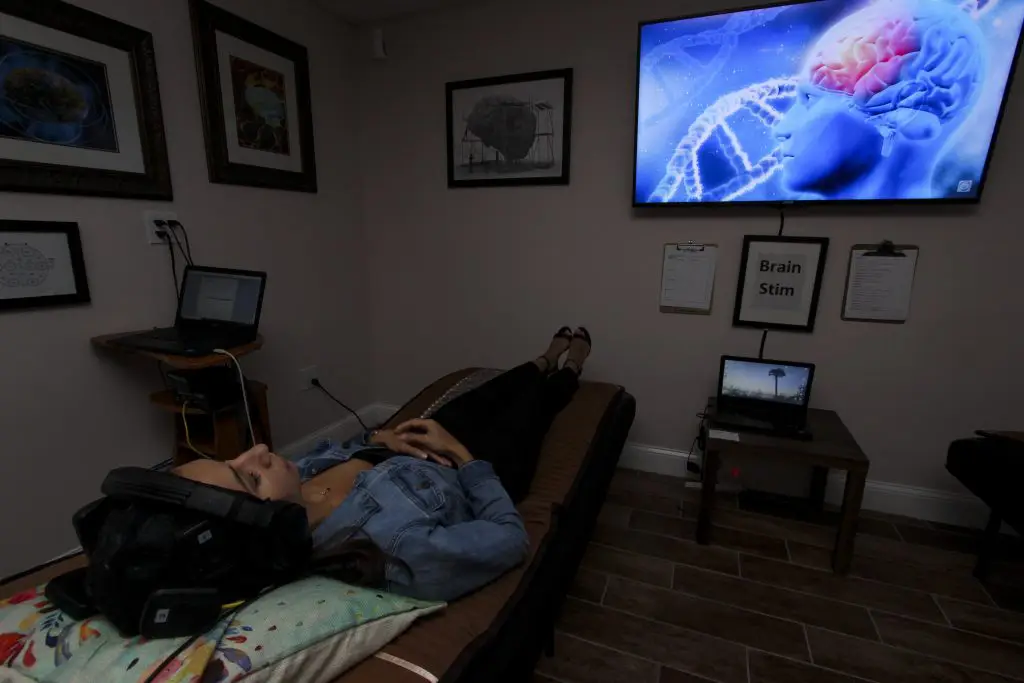
Neurointegration, Brain Stimulation, and Vibroacoustic therapy at SJRP
Integrating Neuroscience into Addiction Treatment
Don’t let the name fool you — neuro integration therapy is nothing like the invasive treatments that were once used for mental health patients many years ago.
Our brain mapping and neuro integration therapy programs provide minimally invasive treatment for substance abuse and addiction. The process is painless, non-invasive, and highly effective. Most clients find this to be one of the most relaxing and beneficial therapies during their time at SJRP.
Each client’s custom brain mapping session results in tangible, easy to read, visual representations of their brain, creating a virtual map that outlines key problem areas or “hot spots.” The map is then used by both our medical and clinical teams to devise a unique treatment plan for each client.
To learn more about how neuro integration therapy and brain mapping guide the recovery process for clients at St. John’s Recovery Place, call our admissions team at 833-397-3422 and ask about the Neuro Therapy Program offered at our holistic rehab in Florida.
What is Neuro Integration Therapy & EEG Brain Mapping?
Neuro Integration Therapy is the integrated use of traditional EEG biofeedback, or neurofeedback, and cutting-edge brain stimulation techniques to identify and treat problems of dysregulation.
Traditional MRIs and CAT scans only give us information about the structure, but don’t dive deep into how the brain is communicating. Mapping, on the other hand, tells us about the function of the neural connections within. Brain waves are recorded and analyzed, revealing whether there is too much or too little activity in certain areas and whether the brain is communicating properly within itself.
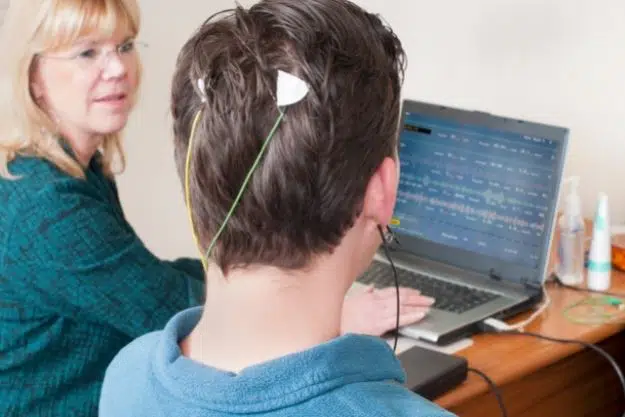
Neurofeedback for drug and alcohol addiction recovery.
What Does a Brain Map Tell Us?
The brain mapping tells us many things. For example, it can let us know if the individual has suffered from an undetected head injury or concussion. This is important because these things commonly go undetected, and yet even mild head injuries can impair thinking and judgement, making individuals much more susceptible to drug addiction or relapse.
We can also detect and assess underlying cognitive problems that can undermine morale and lead to self-medication. One of the single greatest causes of addiction can be unresolved traumatic stress and emotional difficulties. Brain mapping provides a powerful way to show the client how emotional stress has made them vulnerable to addiction.
How Do We Use Neuro Integration Therapy & EEG Brain Mapping?
SJRP uses q-EEG brain mapping as a guide to design a personal care plan specific to the client’s needs. After doing a brain map, we will create an individualized treatment protocol using several distinct therapies to heal and regenerate neural pathways and correct dysregulation.
In other words, we can find where the source of the brain’s dysfunction is and begin to correct it.
Periodic remapping is important, allowing us to see if the brainwaves are starting to re-shape into a more appropriate pattern. Remapping after 10 neurofeedback sessions will give us a progress report allowing us to see if and how we may need to tweak the treatment plan as the brain continues to work on restoring itself.
SJRP’s NeuroIntegration Therapy (NIT) Program Includes:
- an initial assessment with q-EEG brain mapping
- pulsed low-frequency transcranial magnetic field stimulation (PEMF)
- neuropsychological testing
- vibroacoustic therapy (VAT)
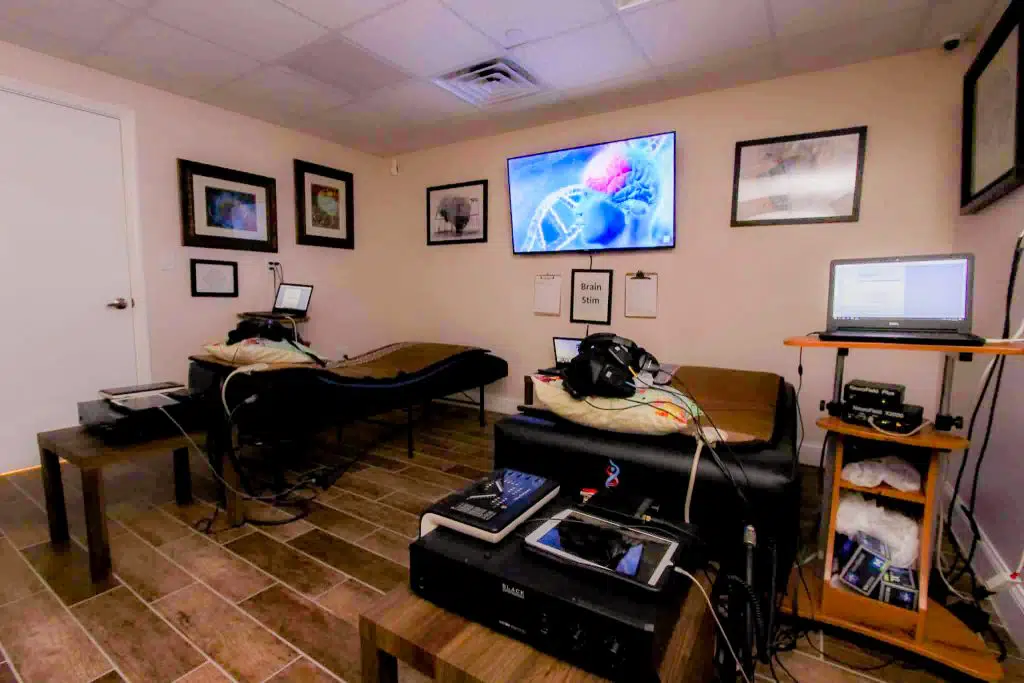
Neuro Integration Therapy and Brain Mapping for Addiction Recovery at SJRP
Low-intensity Pulsed Electro-Magnetic Field Stimulation (PEMF)
Low-intensity Pulsed Electro-Magnetic Field Stimulation (PEMF) treatment works by emitting a pulsating electromagnetic field with varying intensity and frequency, coming from a solenoid placed on the patient.
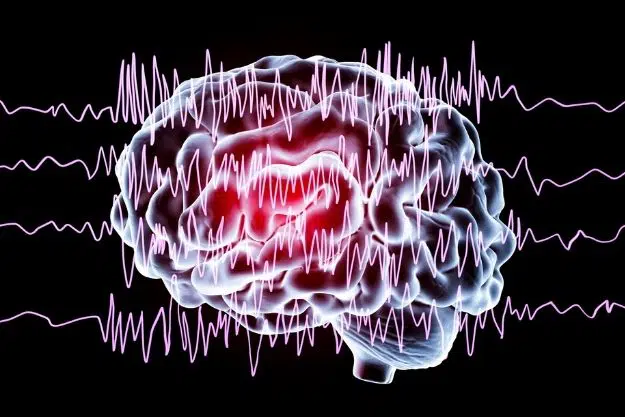
All brain activity is interconnected and responds to specific frequencies and action potentials (electrical charges). The application of pulsed magnetic fields has, through research findings, been shown to help normalize and synchronize brain wave activity.
PEMF is also used to help regenerate cells and tissue at an accelerated rate—promoting healing and facilitating neuroplasticity. Gentle stimulation to brain structures using a specific waveform and frequency will re-balance neuropeptides, neurotransmitters, and neuromodulators. These are all critical to maintain normal mood and behavior.
From NASA to Addiction Treatment
The therapy actually originated from NASA research. It involved the benefits of pulsed electromagnetic fields on astronauts for fatigue, depression, bone loss and other symptoms following even short trips to outer space.
Pulsed electromagnetic field therapy was approved by the FDA in 1979. Specifically, for the healing of nonunion fractures, which came after a Columbia University study that was encouraged by NASA, and has recently gained attention in the U.S. The value of PEMF has been shown to cover a wide range of conditions, with well documented trials carried out by hospitals, rheumatologists, physiotherapists, and neurologists.
Since SJRP’s opening on November 5, 2018, clients receiving approximately five treatment sessions per week, have experienced an 85% reduction in symptoms. The speed and depth with which NeuroIntegration Therapy can synchronize and stabilize those in recovery is unmatched in the recovery industry.
Neurofeedback: Monitoring Brain Activity with LORETA
The absolute advantage in NIT is known as LORETA z-scored neurofeedback. LORETA is a mathematical system that allows us to build a 3-D model of the brain’s electrical activity. In doing so, LORETA can detect, assess, and transform different structures of the brain that cannot be touched by traditional neurotherapy.
Building upon FDA-cleared brain mapping technology we can affect deeper brain structures that control learning, emotional regulation, as well as the control of cravings.
LORETA allows us to actually see the brain’s addiction or craving network in action.
Once the client’s brain has been normalized and stabilized by various stimulation techniques, LORETA can affect a deep healing, thereby rehabilitating and/or transforming the client’s ability to learn. There are over 2,000 peer-reviewed research papers utilizing LORETA technology, with the research ongoing and worldwide. We are proud to be associated with and working with the creators and the leading practitioners of this exciting new technology in the neuroscience field.

Loreta Z-Score, commonly used for mental health disorders, is integrated into our comprehensive NIT process at SJRP.
Vibroacoustic Therapy (VAT)
Vibroacoustic Therapy (VAT), creates sonic waves that coincide with brain frequencies measured by an electroencephalogram (EEG). By integrating VAT with NIT simultaneously, the individual’s mind and body become synchronized. This is extremely useful during the Detox phase of addiction treatment programs as the combination reduces the negative side-effects of drug/alcohol withdrawal.
From anxiety and stress reduction to influencing an individual’s mood, the entire body can be influenced by external frequencies and vibrations. Drum rhythms, for example, have been documented as having a positive effect on individuals. VAT is structured as a holistic prescriptive which provides relief and support during addiction recovery.
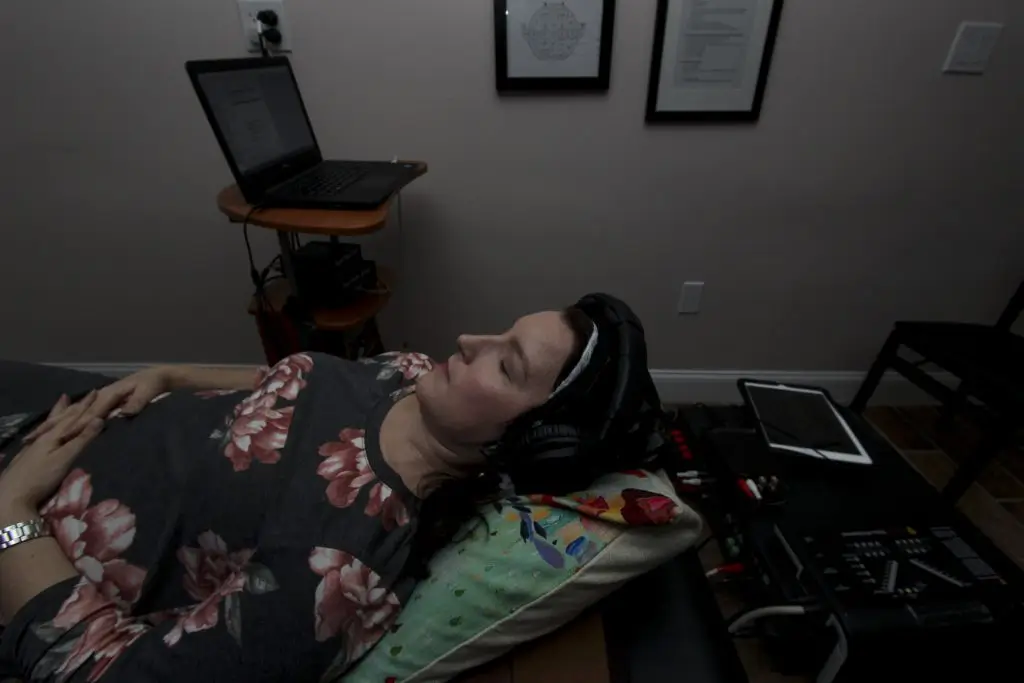
Patients undergoing VAT experience reduced anxiety and elevated mood.
VAT and NIT Affect Neuroplasticity
Combining VAT with neuro integration therapy sessions simultaneously enhances the differential gradients and frequencies during stimulation therapy, and as such, “retrains” the brain. The brain’s regenerative abilities are truly amazing. By activating neurons and supporting glial cells via neuro integration therapy, VAT, and stimulation, the brain will rewire and fire new positive neuronal pathways. This causes the brain to become neuroplastic and receptive; positively charged and eager to receive a new program that will embody healthy lifestyle changes.
SJRP’s mission is to help rebuild lives and empower our clients to overcome addiction. NIT and VAT are designed to synchronize mind, body, heart and spirit. For this reason, NIT has become a cornerstone of our holistic addiction treatment process.
Our NIT / VAT Playlist Library
Check out our full playlist library here: https://www.youtube.com/channel/UCyqagXJwW-p0scdt158kPRg/playlists
Or just sit back for a bit and relax to the calming sounds of this mix:
Neurofeedback at SJRP
Struggling with a drug use disorder? It’s time to take back control of your life. Our treatment center is dedicated to providing the opportunities and support needed to overcome addiction and start living a better life. Call SJRP today at 833-397-3422 to find out more about neuro integration therapy and brain mapping for addiction recovery.

TL;DR
At SJRP we offer state-of-the-art Neuro Integration Therapy (NIT) to assist our clients in addiction recovery. The program starts with a neurofeedback brain mapping session that helps us see problem areas of dysregulation in your brain function. This helps us create a custom individualized treatment plan using several different therapies. Pulsed electromagnetic field therapy, neurofeedback, and vibroacoustic therapy are used to “reshape” how your brain interprets certain information. Essentially, we’re directing your brainwaves to function in a correct pattern and rewarding your brain when it does.
Neuro integration therapy is painless and non-intrusive. Clients typically complete sessions feeling calm and uplifted. Duration and quantity of sessions depends on a variety of factors, but typically a minimum of 10 sessions is completed and then a brain map is repeated. This shows how the brain function is progressing and if any changes need to be made to the care plan. NIT works in conjunction with our overall recovery approach to create a cohesive and comprehensive protocol that will greatly assist our clients in defeating their addictions.







As someone who has struggled with mental health issues, I cannot stress enough the importance of seeking help when you need it. There is no shame in admitting that you need assistance, and it’s essential to take care of your mental health just as you would your physical health.”