


In Today’s Go-Go-Go World, We Often Forget to Take Time for Our Well Being
It sounds strange.
We often forget to care for our well-being in a world that speaks so often about mental health, emotional self-care, and developing healthy habits.
We end up depriving ourselves of the ability to care for our body, attempting to prioritize self-care.
As a result, we end up neglecting our own needs.
Social Media’s Standards for Self-Care Activities Harmful for Mental Health?
I know, it doesn’t sound right. But give it a moment of consideration.
Day-in and day-out, we scroll past YouTube channels, Instagram posts, and other social media pages rambling on and on about anxiety. People speak on and on about their personal life or relationships, even how critical it is for us to strive for consistent physical self-care activities. Even many Facebook ads target making mention of personal health and wellness.

Heck.
People daily discuss the topics of sleep patterns, nightly bed routines, feelings, productivity, and the importance of reducing stress levels while also pursuing our “best life.”
Especially for women, the standards society sets for daily life are a big topic for discussion.
Instead of listening to professional medical advice, we turn to the entrainment industry to discover, develop, or find proven strategies that reduces stress in our personal lives.
Everywhere You Go, Self-Care is There
If you go out for coffee, you speak about treating yourself for the day. If you have a mug of tea at home after work, you convince yourself to put a candle on to promote a relaxing atmosphere. We talk to co-workers, friends, and even our family therapist about getting enough sleep. We tell everyone about our next big project or how we will prioritize, keeping our mind sharp.
The list goes on and on.
We talk about stress management so much we make the subject top of our priority list. But is our focus on stress reduction helping us relax? Or is our chase for more self-care causing a ripple effect that damages our healthy routine’s positive impact?
Let’s face it. For most women, the concept of personal care is a part of our daily routine conversations. But are we truly giving ourselves enough time to integrate healthy stress reduction habits into our everyday lifestyle?
If we tell the truth, probably not.
Self-care’s rise as a trending topic of interest has companies and people developing new ways to pursue healthy stress management every five seconds. The industry takes up so much energy now it is possible for a person to develop higher stress trying to schedule time to relax.
But this does not mean that self-care is not essential or that you shouldn’t focus on trying to make or maintain time for yourself.
To truly relax, though, you must find ways to care for your well-being that work specifically for you and your body.
What is Self Care?
Professional Medical Advice Defines Personal Care as The Ability to Promote Health and Cope with Illness Independently
With all this talk about personal care, mental health, and its prevalence in social media, it may be time for a proper definition of self-care.
The term in its simplest form translates to “care for oneself,” while professional medical definitions broadly conceptualize the expression as “the promotion for healthy habits or the ability to cope with illness by oneself.” The concept of personal care itself can be vast, encapsulating all the little daily routines people do to manage their appearance and care for their bodies. But it can also refer to the moments where we do something a little extra for ourselves. Anything to help improve our mind, physical health, or mood when life becomes too overwhelming.
Caring for ourselves does not just involve the small daily routines.
Personal care is also our escape; it is time we grant ourselves to deal with stress, practice some deep breathing, and recharge. And it is something we all struggle to do more than we realize.
People In Addiction Rehab Can Benefit from Setting Aside Time for Themselves to Recharge
Never mind the kids, the husband, the wife, parents, etc., for a second.
Even if you are in rehab for addiction treatment, to heal, maintain sleep patterns, high energy levels, spiritual self-care, and continue practicing mindfulness, you need to take a moment to define what personal care means to you.

Professionals can talk back and forth all day on the concepts that pertain to building good restful habits and so on. But no two people are alike, and you must decide what can help you achieve rest.
Whether taking the time to write your thoughts in a journal exploring your feelings in your own quiet time can help you better understand yourself. And learning to understand yourself better can help you become a better steward of your thoughts, emotions, and bodily well-being.
Men, Women, and Even Kids Need Quiet Time for Personal Care
Despite whoever speaks about it most, the common belief that only women discuss and enjoy self-care is untrue.
The subject of personal care is not just for the feminine creatures on the planet to enjoy.
Men, women, and even kids can all enjoy and benefit from personal care, no matter their age, background, or social standing. We all need self-care. But the way we all practice caring for ourselves may take on different forms. Men may invite the guys over to play a game of pool. In so doing, they allow themselves the opportunity to socialize and destress. Or they may play a video game, take some time in nature on their own, watch their favorite movie, or even eat some great food as a form of self-care.
On the other hand, kids find ways to comfort themselves by carrying around a beloved stuffed animal. Or they may rely on their parents to form a firm bedtime routine to help themselves relax.
Women, on the other hand, may try bath bombs, get their nails done, or do a nightly facemask to help themselves recharge. And the list goes on and on. Taking care of ourselves is a non-negotiable, no matter who we are.
But we often get taking care of ourselves confused with the concept of creating time for ourselves.
When to Prioritize Self Care
Practicing self-aid is extremely important and can comprise many different aspects. And even more so if we are recovering from addiction or a substance abuse disorder. We must take time to care for ourselves each day. But we must also prioritize special creating routines to help ourselves relax and recharge.
Self-care is any form of intentional service or action we perform to manage or improve our overall bodily wellness, emotional or mental health.
Taking time to practice self-care can help keep us sane in an ever hectic universe. But, how do we know when we need to make time for ourselves?
To tell the truth, it depends.
Obviously, we must care for our body’s needs each day, like combing our hair or taking a shower, devoting time to care for our spiritual, emotional, or personal well-being on each occasion we dedicate to trying. The point is, even if the only thing you can do to make yourself feel a little bit better today is change your shirt, then you should do that.
Everyone has different self-care needs, and they change based on our lives’ situations and circumstances.
Signs You May Need to Take a Second to Care for Your Emotional Health
If you are looking for specific signs to look out for so you know when to prioritize taking a break, here are a few things you should look out for:
- If you begin to notice that your temper is growing short
- If you are feeling stressed out
- If you are feeling overwhelmed
- If you feel as though you need a change of pace
- If you think you cannot handle not one more responsibility
- If you feel tired out by regular life events
- If you haven’t been getting a lot of sleep
- If you are feeling depressed
And more. In reality, you want to take time to care for yourself every day. It does not have to be extensive, and it is healthiest if you can prioritize self-care each day. Doing this will help keep you balanced and give you an escape from the days that get tough.
You Don’t Need to Feel Guilty Making Time for Yourself
Prioritizing yourself should not make you feel guilty.
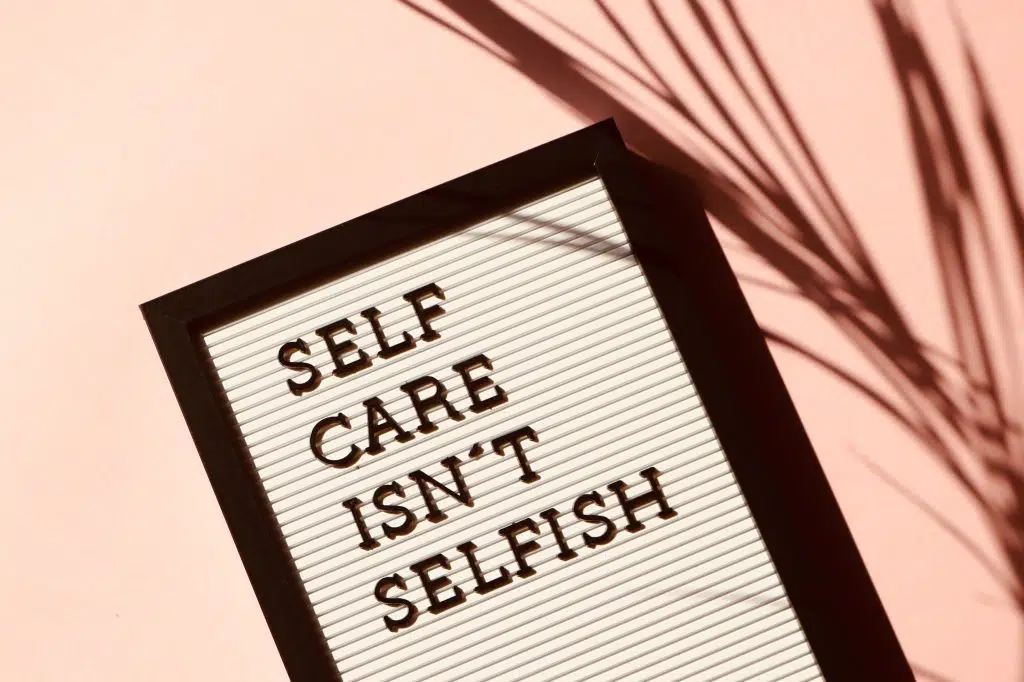
Many women especially struggle with the concept of self-care. Because they feel as though they should be giving their attention to something else, like cleaning or looking after their children. Likewise, individuals working through drug and alcohol rehab may feel guilty taking time to do something they enjoy because it does not directly relate to the recovery journey.
Try not to let your brain give in to those doubts.
Caring for yourself is essential to keeping you on the path to recovery and growth. It is never useless and does not have to be extreme or extensive; it just has to be for you.
How Taking Time to Care for Yourself Improves Your Health
How does taking time to care for yourself improve your mental, emotional, and bodily health? Essentially, why is self-care important?
Caring for yourself on a general level is extremely important.
Our bodies are machines, complex systems that require daily upkeep to continue working at their best. Taking care of our bodies generally helps us feel good to keep up with our responsibilities throughout the day. But extensive self-care can also have its benefits for our mental, emotional, and physical health. The benefits of taking time to care for yourself include:
- It can help us feel accomplished
- It helps maintain inner and environmental peace
- Allows us to feel refreshed
- It helps us avoid burnout
- Encourages relaxation
- Promotes physical hygiene
- Promotes better physical movement
Self-care is an essential part of overall wellness, no matter which way you spin it.
Humans exist at our best when in balance with ourselves.
Caring for ourselves helps propel us through the rest of life in the best state possible. Taking the time to care for ourselves helps us increase our sense of self-awareness; it allows us to recognize flaws to work on, beauty to admire, strengths to utilize, and know when we need to relax. Our bodies and our minds are fantastic machines built to withstand much more than we could ever possibly imagine, but that does not mean our systems are in-exhaustible. We need to upkeep ourselves to keep looking and feeling our best regularly.
Once we take care of ourselves, we can better serve and care for others, promoting balance and regulation in all that we do. A well-regulated mind and body are a well-working system.
3 Ways to Practice Self Care Today
Self-care can be fun and rejuvenating. But with social media giving millions of different personal care techniques to try each day, how can we identify which practices will work for us? Or should we be trying to do them all?
Luckily, self-care is marvelously flexible.

And you don’t need to follow the example of a social media guru to create a routine that works best for you. Sometimes all you need is three minutes to yourself.
But if you aren’t sure how to begin practicing self-care in your daily life, here are three personal care practices you can try today:
- Spending time on a walk to exercise: You don’t have to walk a lot; ten to fifteen minutes can help you gain all of the quiet and mental clarity you need to recharge if you are a busy mom, working through rehab, or need a minute to breathe at work. A walk can help you process and relax significantly.
- Practice breathing techniques: You don’t have to do anything fancy. You can sit at the chair by your desk, take measured breaths in, and let them out for a 5-minute interval to help recenter your mind and encourage relaxation. Not all self-care needs to be highly purposeful and breathing you can do anywhere.
- Try to separate yourself from social media: Often harder said than done, spending hours scrolling through Tik Tok, Instagram, or Facebook can overload your brain significantly, making it challenging to relax at any point during the day.
Self-care looks different for everyone.
Some people benefit more from playing an instrument after work. Some do best by reading a book on their breaks, and others do well by going out on a jog whenever they get the chance. Self-care does not have to be a linear set of practices to work, and you need to prioritize it to help make it work for you.
Everyone can benefit from prioritizing self-care, especially those working through drug and alcohol rehabilitation.
All you need to do to start prioritizing caring for yourself intentionally helps build a routine, keeps you from getting bored, and allows you to practice new and ever-expanding coping skills daily. Try one of these self-care systems out today to see if it works for you! Or ask family and friends what they would suggest you try for simple ways to relax.
You never know what might end up working for you.







Leave A Comment