


How Music Therapy Can Help with Recovery: They say music is good for the soul, but it seems it’s also good for addiction recovery. This therapy is not simply listening to music though. It goes much deeper than that, using lyrics and melody to engage emotions, increase motivation, and reduce barriers to recovery.
Music therapy helps engage emotions, increase motivation, and reduce barriers to recovery.
What Is Music Therapy?
Music Therapy (MT) uses various clinical and evidence-based music interventions within a therapeutic relationship to help an individual achieve a specific set of goals. It is an established practice whose roots date back to the days of Aristotle and Plato.
In current times, a trained music therapist will typically begin by identifying an individual’s strengths and needs. Specific individualized goals are then set that will utilize those strengths and enhance them. The positive results of which are typically transferred to other areas of the individual’s life.
Can’t Play an Instrument? No problem!
According to the American Music Therapy Association (AMTA), a person does not need to have any specific musical talents or be able to play musical instruments to benefit from MT. If you’ve never played an instrument let alone know how to read sheet music, or your singing is best left to solo car rides, you need not worry! There are plenty of treatment options in MT such as writing lyrics, lyric analysis, relaxation training, and musical games.
Applications of Music Therapy
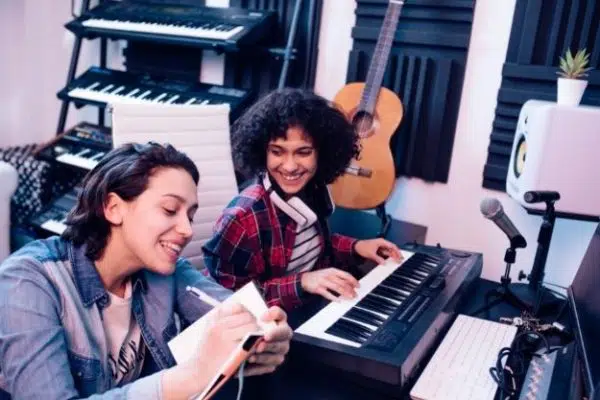
This unique experiential therapy addresses physical, emotional, cognitive, and social needs by incorporating creation, song, movement, and listening to music. It has been proven to be effective for overall physical rehabilitation, increasing motivation and engagement in treatment, providing emotional support, and creating an outlet for communication and expression of feelings. This therapy is being used in numerous applications such as:
- Child & Adolescent Behavioral Health
- Autism Spectrum Disorder
- Alzheimer’s Disease
- Mental Health
- Pain Management
- Crisis & Trauma
- Correctional & Forensic Settings
- Military Personnel, especially for dealing with Post Traumatic Stress Disorder (PTSD)
How Is Music Therapy Used in Substance Abuse Treatment?
When you think of drug treatment you often think of detox, 12-step programs, group counseling, and individual therapy. Most research and data surrounding the effectiveness of rehab programs rely on such evidence-based practices. However, a whole field exists that doesn’t always get as much attention as it should, despite its growing benefits.
Complementary Therapies Enhance Effectiveness
CAM includes holistic and experiential therapies that dive deeper into the human mind to understand where the source issues lie. These therapies teach an individual how to accept their situation, move past it, and use healthy coping skills for future situations.
In substance abuse rehabilitation, complementary therapies are recommended because they are used alongside traditional evidence-based treatments, as opposed to alternative therapies which are used in place of standard therapies. Complementary therapies work together to enhance the effectiveness and results of the recovery process. This therapy type falls into this category.
Complementary therapies enhance traditional drug and alcohol addiction treatment.
Music is More Engaging Than Traditional Therapy
In SUD treatment, the individual is working through issues of denial, honesty, trust, and relationships. This can be difficult for most people to address in traditional talk therapy. But this therapy helps tap into emotions. It is more engaging and has been shown to increase motivation to continue treatments.
Some reports show that this therapy is particularly effective in women and adolescents. This is not to discount the male population, there is simply not enough research in the field as a whole.
Ways Music Therapy is Implemented in Addiction Treatment Programs
This therapy can be used with all individuals irrespective of their musical background. Some examples of ways MT is implemented include:
- Analyzing songs and lyrics, which demonstrate positive emotional change.
- Relaxation training like drumming, which is especially useful as a coping technique for relapse prevention.
- Musical games and movement, which have shown a decrease in anxiety, depression, anger, and stress.
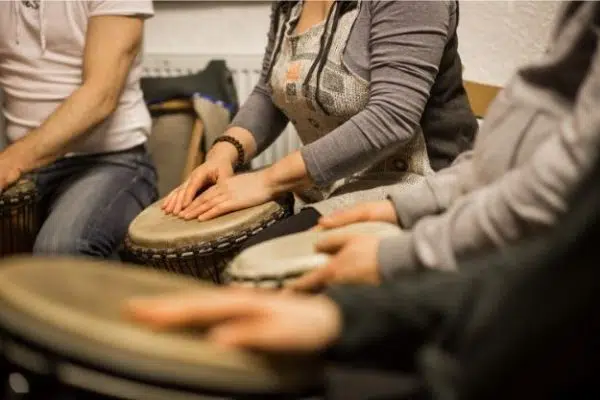
Individuals can play instruments, write songs, analyze lyrics or engage in musical games.
Music Therapy and Co-Occurring Mental Health Disorders
A significant percentage of people suffering from addiction and substance use disorder are also dealing with a mental illness. The occurrence of both disorders is known as a co-occurring disorder or dual diagnosis. Part of a holistic and integrative approach to addiction treatment is the use of complementary therapies to help heal deeper issues rather than just the addiction that lies on the surface. This allows for a more comprehensive recovery.
Breaking Through the Communication Barrier
People who deal with a mental health disorder often have difficulty with communication and expression. With MT, they are able to use active music-making, music listening, and discussion to address issues they may not have been able to convey in traditional talk therapy. Music carries with it a sense of familiarity, predictability, and feelings of security. As such, it inherently stimulates the senses and provokes emotional responses.

Music-based therapy can help improve overall well-being.
Positive Results in Depression, Anxiety, and PTSD
Music therapy has shown positive results in research and clinical use for a variety of mental health issues including depression, anxiety, and post-traumatic stress disorder. It has even been shown to be effective in those who are resistant to other treatment approaches.
In a recent study of treatments for depression, researchers compared the results of those who received standard treatment versus those who received standard treatment in addition to MT. The latter group had shown reduced symptoms of depression and anxiety and improved functioning in daily life.
Benefits of Music Therapy Interventions in Addiction Treatment
Studies have found numerous benefits of music therapy for SUD patients. It has been particularly effective in increasing motivation and willingness to participate in SUD treatment.
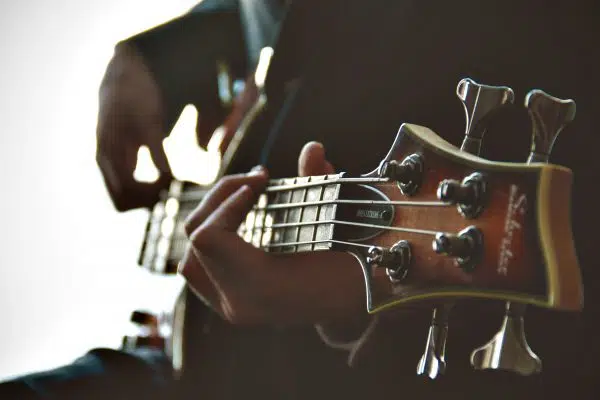
Playing instruments can reduce negative emotions.
The AMTA lists these specific outcomes of MT interventions when used in substance use rehabilitation:
- Reduced muscle tension
- Improved self-image and self-esteem
- Decreased anxiety and agitation
- Increased verbalization and communication
- Enhanced interpersonal relationships
- Improved group cohesiveness
- Enhanced self-expression and self-awareness
- Increased motivation
- Improved perception and understanding of feelings
- Improved ability to recognize and cope with traumatic triggers
Effectiveness of MT
Research and studies continue to show positive results and effectiveness in the use of an approved music therapy program. However, the research is still limited. Though music in substance use disorder treatment dates back to the 70s, the fields of mental health and substance use didn’t really begin to work together until the late 80s/early 90s.
One study in 2014 showed only 14.7% of rehab facilities incorporated the therapy in their recovery program. But as behavioral health has become more commonly covered by insurance and as drug and alcohol rehabs incorporate more holistic approaches to addiction treatment, music therapy and music-based interventions for treating drug and alcohol addiction are becoming more widespread.

Music can reduce stress and anxiety.
FAQ
Why is music therapy important in recovery?
Music therapy can be extremely effective in helping individuals cope with emotional issues that arise during addiction treatment, particularly feelings of overwhelm and anxiety. In addition, it can be useful in addressing triggers that would typically result in relapse.
How does music therapy reduce anxiety?
Listening to music increases endorphins (feelings of happiness) and reduces cortisol (stress hormone) resulting in dramatically lowered levels of anxiety and stress.
Does music therapy have negative effects?
Music therapy is non-invasive and proven to be effective, showing no adverse side effects in study observations. Not only is it beneficial for patients, but it is relatively inexpensive so it’s a win-win for both treatment centers as well as their clients.
Rhythm to Recovery Program at SJRP
At St. John’s Recovery Place (SJRP) we are proud to offer music therapy in our Rhythm to the Recovery program. We partner with musicians and music therapists to provide a one-of-a-kind treatment program that will help you explore, create, relax, and grow.
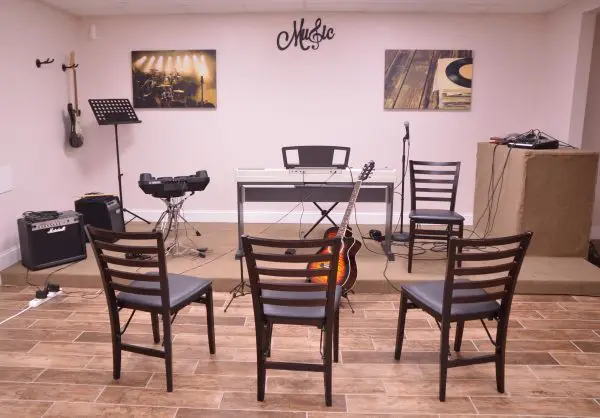
SJRP Music Room
Our music wing is specifically designed as an open environment to promote impromptu collaboration and social interaction when not being used for individual sessions. We’ve even had our fair share of fun concerts performed by clients on weekends or special events.
For more information about the ways Music Therapy is incorporated into the rehab program at SJRP, call an admissions counselor today at 833-397-3422. Let us help you begin your journey to recovery!
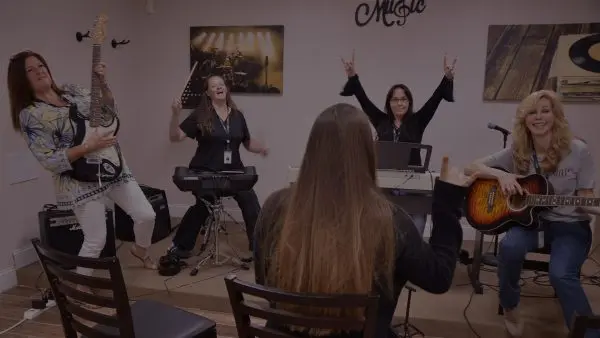
Find out how music therapy can help you on the road to addiction recovery.
SOURCES
American Music Therapy Association. Definition and Quotes about Music Therapy. Retrieved April 28, 2021.
American Music Therapy Association. Music Therapy Interventions in Trauma, Depression, & Substance Abuse: Selected References and Key Findings. Retrieved April 28, 2021.
Aalbers S, Fusar-Poli L, Freeman RE, Spreen M, Ket JCF, Vink AC, et al. Music Therapy for Depression. Office of Disease Prevention and Health Promotion. 2017. Retrieved April 28, 2021
Hohmann, L., Bradt, J., Stegemann, T., & Koelsch, S. (2017). Effects of music therapy and music-based interventions in the treatment of substance use disorders: A systematic review. PloS one, 12(11), e0187363. Retrieved April 28, 2021.
Aletraris, L., Paino, M., Edmond, M. B., Roman, P. M., & Bride, B. E. (2014). The use of art and music therapy in substance abuse treatment programs. Journal of addictions nursing, 25(4), 190–196. Retrieved April 28, 2021.
W Gallant; M Holosko; S Siegel. Use of Music in Counseling Addictive Clients. Office of Justice Programs. Journal of Alcohol and Drug Education Volume: 42 Issue: 2 Dated: Winter 1997 Pages: 42-52. Retrieved April 28, 2021.







Leave A Comment